For over a decade, Felix Sturm was one of the most influential figures in German boxing. On February 15, the 46-year-old will return to the ring in cooperation with AGON Sports. BOXSPORT takes a look at the impressive career of the ex-champ, who wants to be a mentor for the next generation.
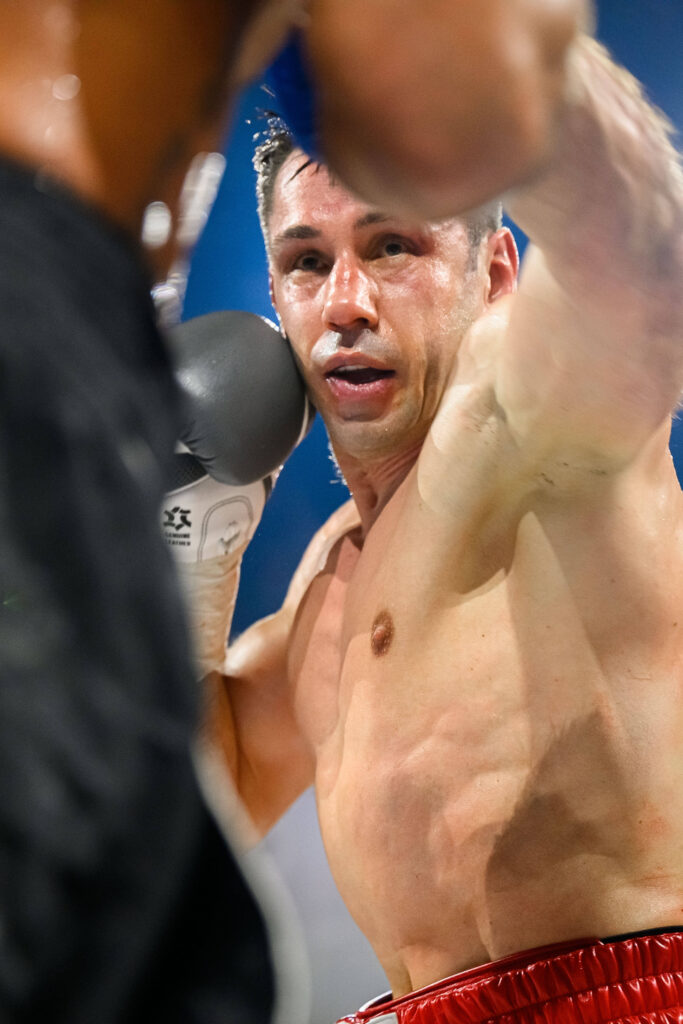
The next showdown is not the end of the story. “It would be a dream come true to box for a sixth world title,” says Felix Sturm (44-6-3, 19 knockouts) ahead of his fight against Benjamin Blindert (14-1-2, 10 knockouts) in the Ratiopharm Arena in Neu-Ulm – and sends a greeting to the big boxing associations: “I’ve always been a representative that you can show well. You can write beautiful stories in boxing.”
Sturm’s own great story as a professional began in January 2001, when the Leverkusen-born fighter won his debut against the Portuguese Antonio Ribeiro in Munich. The now 46-year-old quickly gained a reputation as a boxer who is not only technically adept, but also able to strategically shape fights and wear down his opponents. Sturm’s big breakthrough came in 2003: at the age of 24, he secured the WBO middleweight world title with a technical knockout against Argentinian Hector Javier Velazco. A milestone in the fighter’s career – and the foundation stone for his ever-growing fan base in Germany at the time.
Sturm rapidly developed into a figurehead of German boxing. His fights became events that only a few other ring greats could overshadow at the time. “I benefited back then,” says Sturm looking back. “Whether it was Dariusz Michalczewski, the Klitschkos or other top stars who filled the halls: I was allowed to box in their shadow, that was profitable for me.”
Felix Sturm: Controversial result against de la Hoya
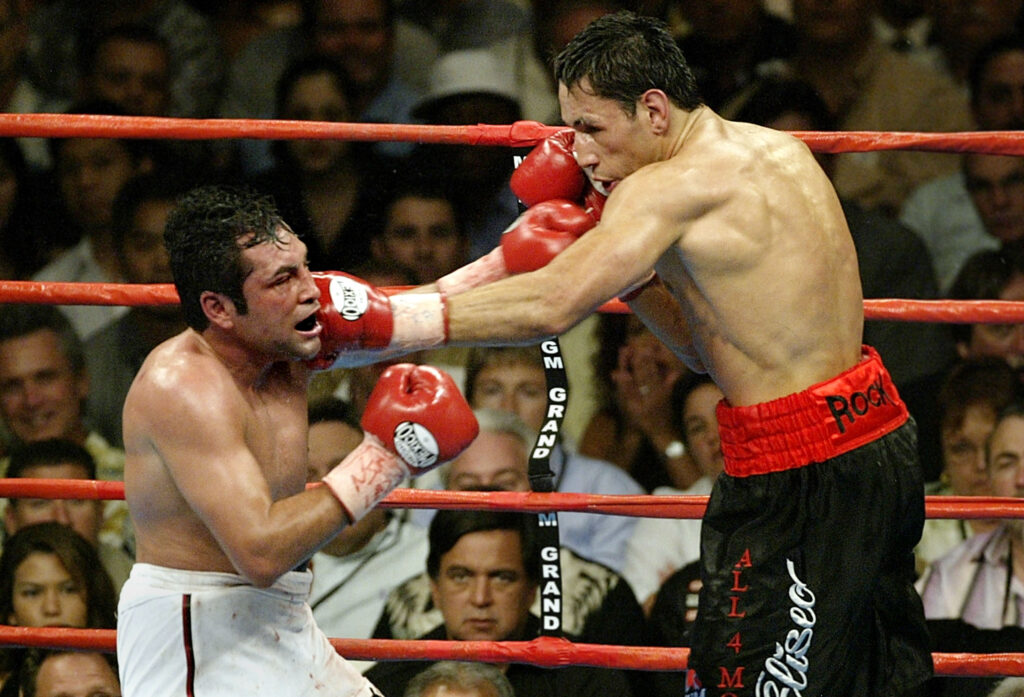
One of the biggest ring battles in Felix Sturm’s career took place in Las Vegas in 2004: the fight against boxing legend Oscar de la Hoya. Although the young German star was considered the clear underdog, he put in an outstanding performance, repeatedly putting the experienced de la Hoya under pressure and driving him to the brink of despair. In the end, Sturm lost the fight on points, but the result was highly controversial – most experts had the Leverkusen fighter down as the winner. Nevertheless, this bitter defeat in the boxing mecca of Las Vegas was a turning point in Sturm’s career: he had proved that he could compete at the highest level and achieved international fame.
The next milestone followed in March 2006: Sturm won the WBA world championship belt against the New Zealand title holder Maselino Masoe, but had to put up with criticism as he only defended in the final rounds. Four months later, he lost the belt to the Spaniard Javier Castillejo, but was able to regain it in the rematch in April 2007. This was followed by convincing victories against Jamie Pittman, Randy Griffin and Sebastian Sylvester in 2008. Sturm defeated the previously unbeaten Japanese Koji Sato by technical knockout in April 2009.
In 2010, the boxing world controversially discussed the WBO’s appointment of the German ring hero as “super champion” without him having to face mandatory challenger Gennady Golovkin – although he had been without a title fight for a year. The association justified this step with an ongoing legal dispute between the two boxers and their promoter Universum Box-Promotion. In September of the same year, Sturm then defended the title with a points victory against Giovanni Lorenzo.
The fourth belt
He secured his entry in the history books in December 2013: the then 34-year-old won the IBF middleweight belt by defeating Britain’s Darren Barker – making him the first German to become world champion for the fourth time. Sturm also won the WBA world championship belt again in 2016 – this time in the super middleweight division – against the Russian Fedor Chudinov, who had beaten him a year earlier.
With a total of five world championship titles with three different federations, Felix Sturm is considered one of the most successful German boxers of all time. Now “The Fighter” is dreaming of world title number six and wants to take some of boxing’s all-time greats as role models: “Vitali Klitschko is a good example. He came back after several years and became world champion straight away. The same goes for George Foreman and Bernard Hopkins.”
Felix Sturm promotes talent
He now also devotes more time to his own boxing stable Sturm Boxing, social projects and is committed to promoting young talent in boxing. This is another reason for the cooperation with AGON Sports. “We want to make a difference. We have top talent, AGON Sports has top talent,” Sturm emphasizes. “I believe that when two such strong parties come together who love the sport and want to move it forward, you can achieve a great deal together. Especially if you put your heart and soul into it.” Another reason for the long-time champion to return to the ring: “The idea came up that I could help push it all forward, with my name and my reputation.”
Felix Sturm’s legacy as one of Germany’s greatest boxers is undeniable, despite some controversies and challenges. With his successes, he has paved the way for future generations and is happy to take on the role of mentor. “The guys who are all there can become really big. They just need a stage and support. I hope I can pull them along a bit.” Perhaps German boxing will still be able to write great stories in the future.
Text by Thomas Geleszus