Before I get started, I’m really glad you’re here to read my column. It’s going to be chaotic, funny, but mainly 100 percent real. I’ll be sharing lots of anecdotes and experiences from the world of boxing, but also giving you some exciting insights into my everyday madness. And now it’s time to clear the ring!
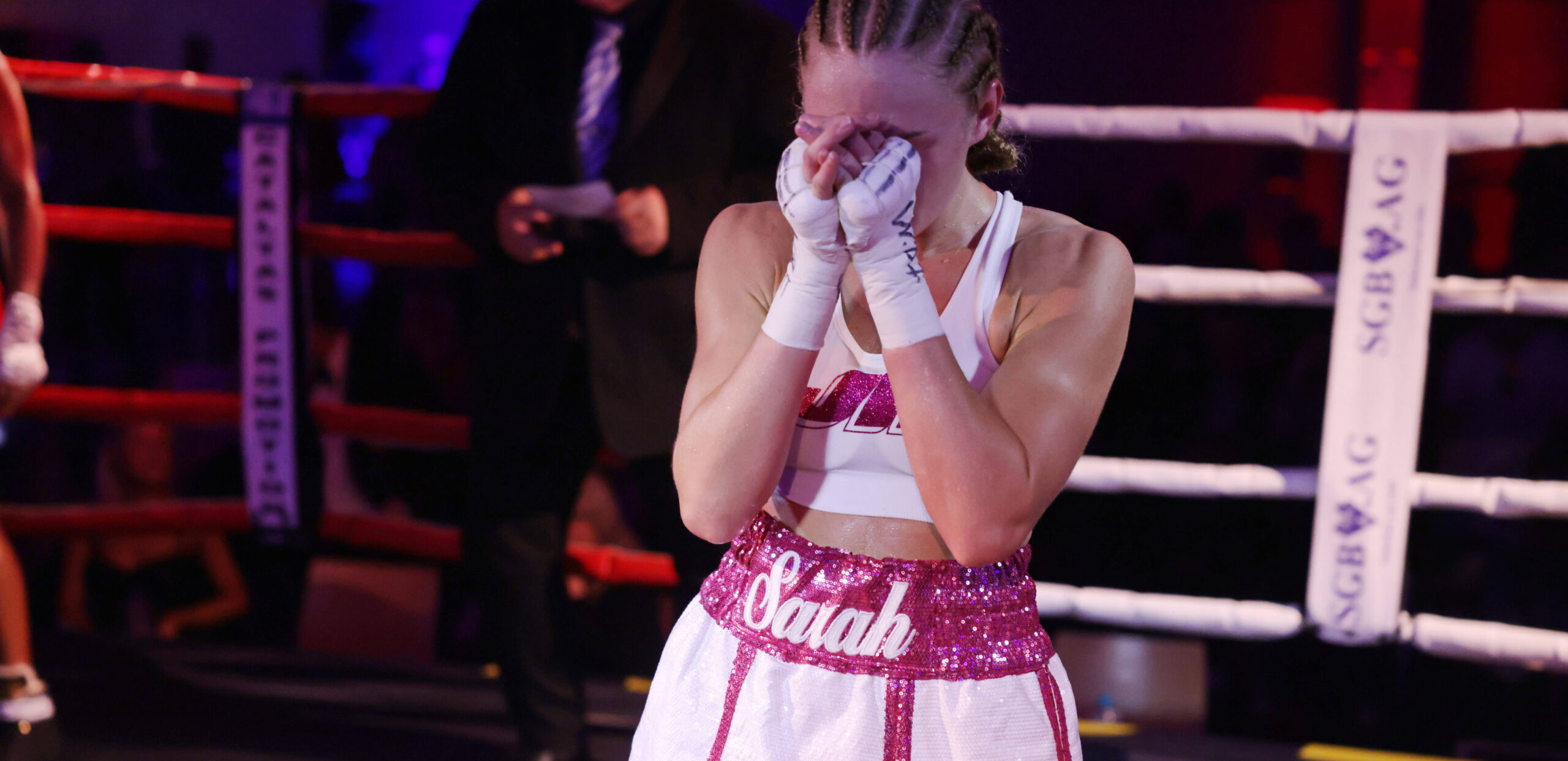
From the outside, boxers always appear strong, self-assured, confident and unbreakable. However, the outside world rarely sees what is really going on inside many athletes. As success grows, the pressure of expectation, self-doubt and fear of failure become ever greater. Pressure that was initially perhaps only extrinsically motivated is quickly internalized and takes on an intrinsic dynamic that many are unable to withstand in the long term. Competitive athletes have often lost the simple “fun” and love of sport on their road to success, because the limelight changes personalities.
In the boxing business, you face the big problem that there is a kind of unspoken law: Losing a fight destroys your career. Many are afraid of losing sponsors, promoters or managers – and therefore also financial resources. A look at MMA shows that it is considered normal to lose fights and that fighters can still have remarkable careers. Even the greats like Ali or Tyson don’t have a flawless fight record – yet everyone wants to have the career of Mayweather, for example. A defeat scratches at an athlete’s identity and can shatter their self-image. A cycle of self-doubt follows.
Politics in boxing
In addition to the huge influence on the athletes’ psyche, there is also power and manipulation. Unfortunately, it is often not just about who is the better fighter, but also about who has the better connections. There is a kind of politics in sport. Boxers face contract negotiations and have to rely on people, even though they often can’t trust them. However, at no point should it be forgotten that these people are not only looking at their sporting career, but also at maximizing their profit.
It quickly becomes clear that sport is becoming a complex business, which in turn can lead to enormous mental stress. The pressure is therefore not only to be found in the ring.
Ultimately, this constant mental strain can lead to inner exhaustion. It is not uncommon for athletes to suffer from depression. The invisibility of this illness is particularly dangerous. Many athletes continue to function even though they have long since collapsed internally. Tyson Fury is the best-known example: he spoke openly about his depression, which was accompanied by alcohol and drug abuse.
The protective eye
To counteract such dynamics, it is crucial to have people you trust and can open up to. For many boxers, this is the trainer. They have a great responsibility and should recognize warning signs and keep a protective eye on their protégé – not only in training, but also in other areas of business. Mental fitness is the basis for any top sporting performance. That’s why some athletes consciously choose to receive long-term support from sports psychologists in order to protect and strengthen their mental health.
Sarah Liegmann
Sarah Liegmann was born in Bonn on January 26, 2002. The featherweight has been boxing professionally since 2021 and trains and lives in Germany and the USA. Liegmann, aka “The Princess”, is the reigning WBC junior champion. The former kickboxer also secured the WBF World Championship belt.
Website: princess-boxing.de
Instagram: sarahliegmann
Facebook: sarah.liegmann