In the first part of this exclusive BOXSPORT interview, Felix Sturm reveals what he’s particularly looking forward to in his upcoming fight and what he thinks German boxing is missing compared to the past.
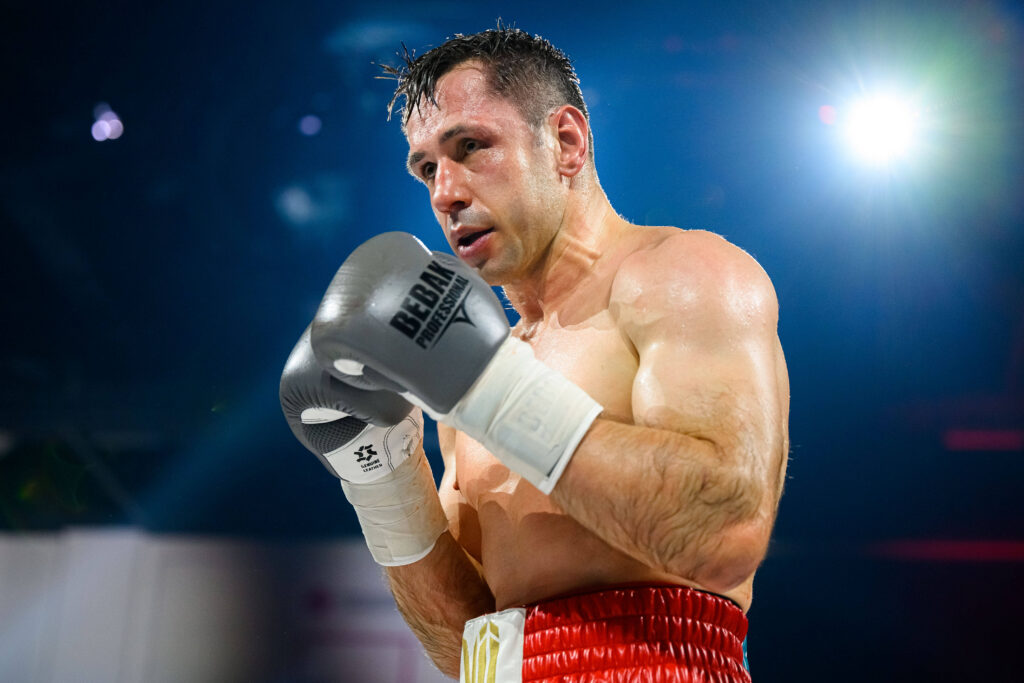
Felix, your next fight will be your last. Is there anything in particular you’re looking forward to that night?
The whole evening is special. Actually, not just the evening, but the entire fight week. The weigh-in, the final days, the last training sessions, even the last few kilos I still have to lose as a competitor—I’m looking forward to all of it. I’m going to enjoy every single moment. The fight, of course. But there isn’t just one special moment. What’s special to me right now is how incredibly fast time is flying by. That’s also a bit of a shame and a little sad for me.
How will this boxing event unfold?
I’m a competitive type. There are boxers who go to the arena beforehand, have their rituals, and soak it all in. It’s different for me. On fight night, I arrive at the arena about two hours early, get ready, and then we march in. I think it’s going to be very, very loud. A lot of people are expected to attend, there will be celebrities there, and the atmosphere is going to be just great.
But it’s not just my fight that’s important. We have a lot of great undercard bouts, featuring many top talents from Germany. Sure, most of the focus that night will be on me, but it’s also nice to give this new generation a platform. These guys can show what they’re made of and prove that German boxing is alive and well. That it can rise to the top again—with the right people around the ring and with people who know how to tackle this kind of challenge.
You’ve said time and again that you want to give something back to German boxing. What is German boxing currently lacking the most?
First and foremost, we’re missing partners. Back in the day, there were ARD, ZDF, RTL, ProSieben, and Sat.1—broadcasters that supported us and gave the guys time to develop. We’re from a different era. Everything has changed since then. Many people underestimate the impact streaming services and social media have had on sports. We’re from a time when we were winning world championships, filling arenas, and constantly having to adapt to new platforms. Back then, there were different tools: newspapers, major daily papers, TV shows. You had to be a certain kind of guy, have a recognizable face, just to even get invited. Then came Facebook, then Instagram, TikTok, YouTube—those are completely different times.
Today, many streaming services are only looking for established boxers—guys who are already world champions or on the verge of becoming one. The kind of development program we had back then hardly exists anymore. We were very fortunate that Dariusz Michalczewski, the Klitschkos, Henry Maske, and a few others were pioneers. After that, a new generation emerged—me, Arthur Abraham, and a few other guys. We carried the torch forward. At some point, though, boxing fell a bit by the wayside because the quality wasn’t what it used to be. And those guys weren’t around anymore either. Now there are a few guys again who can achieve great things—who have what it takes to become world champions and fill arenas. It doesn’t have to be the Porsche Arena or the Lanxess Arena right from the start. Start with an arena holding 2,000 or 3,000 fans. Then you build up the buzz.
That’s what social media is for these days. YouTube, TikTok, Instagram—you can use them to build your own channel and make it interesting. You can see all over the world how many streamers are gaining platforms. A lot of that can be applied directly to boxing. You just have to put in the effort. Promoters need to explore new avenues. The question is whether they’re willing to do so and whether they have the patience.
There are candidates who are committed to boxing. But you have to be more creative than in the past. Just waiting for a boxer to be “ready” doesn’t work. You have to build narratives and provide individualized support for each boxer. Everyone is different; everyone needs their own story. Many people forget that.
Could Agit Kabayel be a kind of trailblazer?
Agit isn’t your typical trailblazer, but his story is incredibly compelling. He’s now the WBC world champion, and he’s fought his way to the top. That might sound silly, but that’s exactly how it is. He’s taken out everyone who needed to be taken out. He’s followed the old-school path. He’s proven himself through fights. He didn’t make a name for himself because he had a massive social media following. He made a name for himself because of who he is as a person and as a fighter. He’s taken out all these giants and fought his way to the top. That deserves respect.
The heavyweight division is, of course, in a league of its own. And Agit’s era is special because it features big names like Oleksandr Usyk, Tyson Fury, and a few others. When someone from Germany comes along—someone many people didn’t even have on their radar—and beats top-tier fighters like that, or someone many others avoid facing, it just shows his quality.
But Agit’s path to getting there was rocky. Now he’s getting invited, now many are writing about him, now many are supporting him. I know that feeling myself. When you’re at the top, people are happy to invite you, and you get to tell your stories. But along the way, very few people accompanied or encouraged Agit. He worked his way up all on his own.
You can find parts two and three of the interview on box-sport.de in the coming days.
Interview by Robin Josten