To mark the death of boxing legend George Foreman, BOXSPORT takes a look back at the sporting career and extraordinary life of two-time world heavyweight champion “Big George” Foreman.
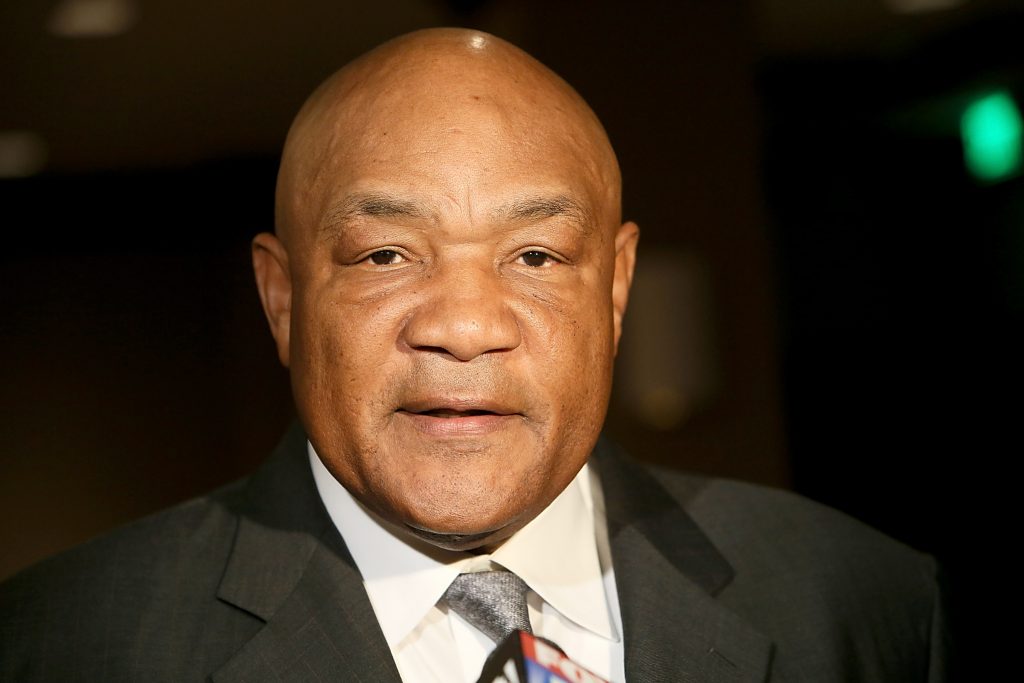
George Foreman was born on January 10, 1949, the son of Nancy Foreman in Marshall, Texas, the fifth of seven children. He was raised by her and JD Foreman, whom his mother had married when George was still a small child. George Foreman did not meet his biological father, Leroy Moorehead, until much later. The family lived in modest circumstances and George developed early on into what is now known as a “problem child”.
His childhood is characterized by poverty and violence. He bullies younger children at school and in the neighborhood and gains a dubious reputation as a bully. Getting up early is anathema to the adolescent. He left school after the ninth grade, at the age of 15 – which he later deeply regretted. “It would make me so proud if I had a college degree,” he told the newspaper “Die Welt” in January 2013 on the occasion of his 65th birthday.
Doc Broaddus turns the bat into a boxer
Instead, he leaves school and soon makes a name for himself as a mugger and thug on the streets of Houston’s Fifth Ward district. His size and aggression earn him the respect of the street gangs. His path in life seems predetermined, the end in prison only a matter of time. But things turn out quite differently in the end thanks to an advertisement from the Lyndon B. Johnson Job Corps. Kennedy’s successor as US President had launched a program to help disadvantaged children and qualify them for jobs. The Job Corps took him in and sent him to Oregon City in California for further training. He takes his quarrelsomeness and ability to start a fight out of nowhere with him.
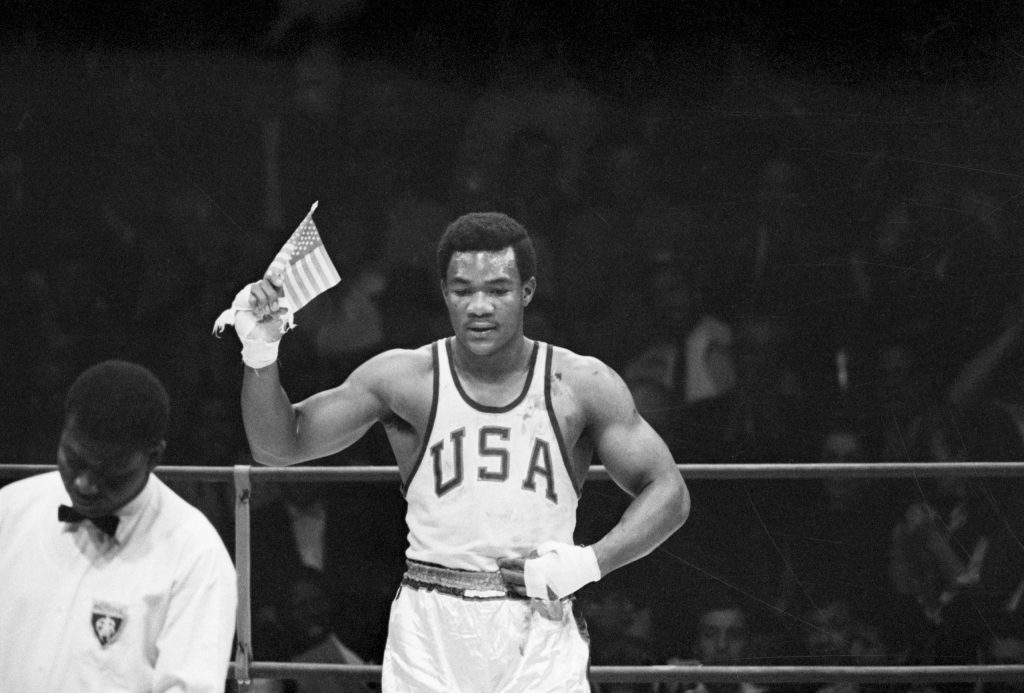
During one such fight with classmates, a fateful encounter occurs: a supervisor, who actually wants to intervene and stop the fight, recognizes the unruly boy’s special talent. Doc Broaddus, an avid boxing enthusiast, guides George’s penchant for fighting in the right direction and gets him into boxing. The progress is outstanding: within two years, Foreman qualifies for the US Olympic boxing team. In 1968, at the age of just 19, George Foreman takes part in the Olympic Games in Mexico City and immediately wins the gold medal in heavyweight boxing.
Controversial stance on the civil rights movement
A few months before the Olympics, civil rights activist Martin Luther King was shot dead in Memphis. This led to riots in many cities in the USA and divisions within the African-American community over the future course of events. Foreman was initially tempted to join the protests.
But the fate of African-American Olympians Tommie Smith and John Carlos holds him back. The two track and field athletes were excluded from the Olympic team for raising their black-gloved fists to the sky during the national anthem – a gesture of the “Black Power” movement. Foreman decides against the protest and prefers to wave the American flag after his victory over the Soviet Russian Jonas Cepulis. Reactions varied between “admirably patriotic” and “opportunistic”.
Switch to the professional camp – and an impressive winning streak
Back in the USA, Foreman moves from the amateurs to the professional ranks. He fought his first professional fight on June 23, 1969 in New York’s Madison Square Garden against Don Waldheim, whom he defeated by technical knockout in the third round. In the following 11 months, Foreman stepped onto the ropes a further 19 times (!). He wins fight after fight. Just like on the streets of Houston in the past, his knockout rate is impressive: when he boxes for his first title, the North American heavyweight championship, on May 10, 1971, he achieves a personal record of 27 victories in as many fights, 25 of which he ends with a knockout. By 1973, he had increased his record to 37 victories – albeit mostly against mediocre opponents.
Joe Frazier is to be the first real touchstone. But even the equally unbeaten heavyweight world champion is no match for Foreman. The fight in the Jamaican capital Kingston lasts less than six minutes. “Big George” knocks the reigning champion down six times in the first two rounds and leaves the ring as the new world champion.
George Foreman vs. Muhammad Ali: the greatest fight in history
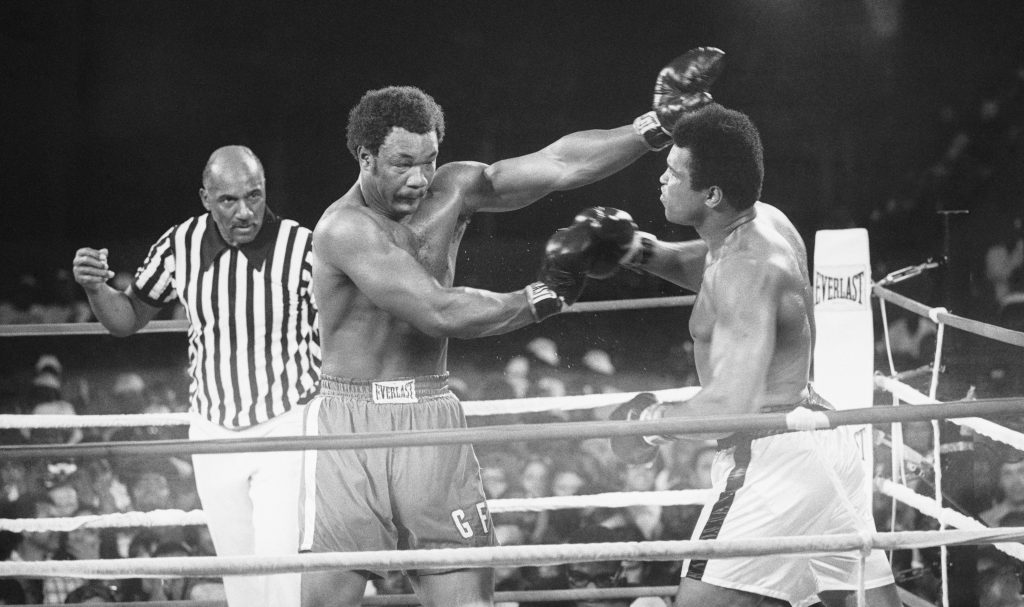
The winning streak only breaks against arguably the greatest boxer of all time, Muhammad Ali, in Foreman’s 40th professional fight, which goes down in history as the “Rumble in the Jungle”. For eight rounds, Ali wore down the world champion in the sweltering heat of Kinshasa with his “rope a dope” tactics. In between, he still has time to provoke his opponent. “I wanted to beat him to death, kill him. But he stood still,” Foreman recalls in an interview. “When he whispered in my ear in the eighth round: ‘Is that all you’ve got?”, I was done.”
The defeat against Ali drives Foreman into a severe depression – and indirectly to God. 15 months pass before he returns to the boxing ring. Foreman contests several fights, all of which he wins. Including a second duel with “Smokin'” Joe Frazier.
Another title fight was in the offing when he climbed into the ring against Jimmy Young in San Juan (Puerto Rico) in March 1977 and lost on points. Much more significant than the second defeat, however, was what happened in the dressing room after the fight. Foreman suffers a heat stroke and collapses from exhaustion. He has a near-death experience. He claims to have been in a hellish, terrifying place of nothingness and despair. He asks God for help and reports how he felt God asking him to change his life and habits. He will later jokingly report about this situation, saying that Young had beaten the devil out of him.
From the boxing ring to the church – George Foreman becomes a preacher
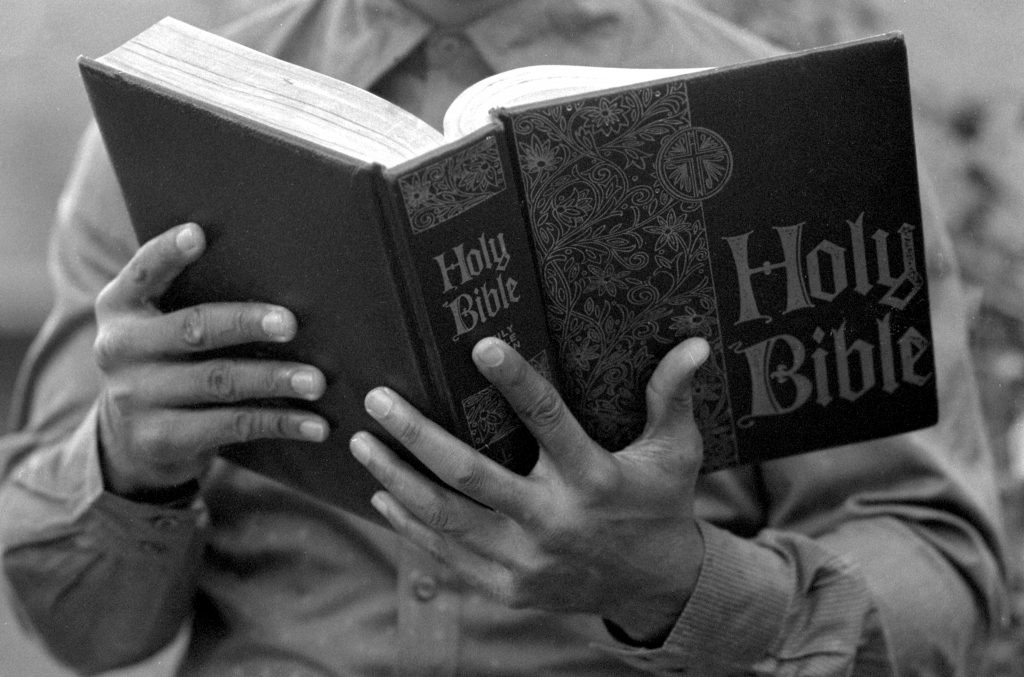
After recovering, the now 28-year-old made a U-turn: Foreman hangs up his boxing gloves and becomes a pastor at the “Church of the Lord Jesus Christ”, a Pentecostal church in Houston, and from then on devotes all his attention to his family, his congregation and his faith. He vowed to fight only for God from then on and began preaching on street corners outside the church. “He would also stop his car in the middle of the street, pull out his Bible and start preaching,” says Foreman’s brother Roy, who had managed his brother’s business away from boxing in the 1970s and was paid handsomely by George.
However, several unfortunate investments had left Roy virtually broke in the early 1980s. He and his wife separated. Roy moved back into his mother’s house and began teaching boxing to children in a run-down church gym. The preachers had given Roy the space on the condition that if he ever collected dues or fees from the kids, he would give the money to the church. “Roy never boxed himself,” George Foreman recalls, “but he learned enough from hanging out with me all those years to be a good teacher.”
Key experience for George Foreman’s charitable commitment
When George paid his brother an encouraging visit one day, a fateful encounter took place. In his autobiography “By George”, Foreman recalls: “When I got there, Roy was working with the kids in the ring and some mothers were busy filling out the registration forms for their boys. One young mother must have recognized me. She must have thought that George Foreman, the former world champion, might be able to help her son avoid going off the rails.”
But out of consideration for his congregation, the former world champion and pastor wanted nothing more to do with boxing. Two months later, when George casually asked his brother Roy about the woman’s son, he learned that the child had robbed a store with a friend, shot the owner and was now in prison. “I felt very shaken and couldn’t sleep,” recalls Foreman. “I was torn up and ashamed because I hadn’t done anything and this boy had ‘slipped through my fingers’.”
On this day, the Foreman brothers decide that something like this should not happen again. With money from his pension fund, Foreman sets up a foundation and buys an abandoned warehouse not far from the Church of the Lord Jesus Christ. He has it renovated and equips it with dumbbells and weights, boxing gloves and a basketball court. He also brings in a boxing ring from his ranch in Marshall. The “George Foreman Youth and Community Center” is created. Here, young and old can come together, relax or play sport. The symbolic membership fee is one dollar a year.
Return to the boxing ring in the service of a good cause
The center quickly became a well-frequented, safe haven. Until one day Ed Wallaceson, George Foreman’s lawyer and financial manager, delivers the bad news: “George,” he says, “it’s great that you’re trying to help people. But I have to tell you, you’re becoming the saddest figure in boxing history since Joe Louis stood outside Caesars Palace shaking hands. You can’t afford to keep this place up. You’re going to have to retire.”
From one day to the next, George Foreman is faced with perhaps the most difficult decision of his life: breaking the bank for his children’s college education – taboo. But even closing the youth and community center is not an option for the now 38-year-old. The work that is done there is too important. “These children need me and I won’t let them down,” Foreman vows. The way out of the misery: a comeback in the boxing ring. “I will be heavyweight champion of the world again,” Foreman announces and resumes training.
After ten years out of the ring, George Foreman is back on top of the world
Ten years out of the ring have left him rusty. Nevertheless, it was enough for a comeback win against Steve Zouski. As a result, “Big George” takes on an opponent of manageable quality on average once a month. In order to get a feel for boxing again and work his way up the rankings of the world federations. His hard work was rewarded: in 1991, he was actually given the chance of another title shot. At the Convention Center in Atlantic City, Foreman stepped into the ring against Evander Holyfield, the world champion of the three major boxing associations WBC, WBA and IBF. Surprisingly for many experts, the now 42-year-old fights extremely well. He forced his opponent, 13 years his junior, to fight the full 12 rounds. The unanimous points victory for Holyfield does not hide the fact that George Foreman is back on top of the world!
Mega-fight against Mike Tyson does not materialize
However, his next big target, a fight against Mike Tyson, does not materialize, as Tyson is sentenced to six years in prison for rape in 1992. Instead, Foreman was allowed to fight Tommy Morrison in 1993 for the vacant title of the smaller WBO. This fight also went the full distance and ended in a clear points defeat for Foreman.
Does this mean the end of his charitable work? Not at all. Because as early as 1989, Foreman began to market his name and his face while promoting his comeback in the ring. He advertises everything that can make money: exhaust systems, potato chips, sports shoes and barbecues. To this end, he also creates a new image for the public. It was the birth of the advertising figure of “Uncle George”, the smiling, friendly and always good-humored George Foreman.
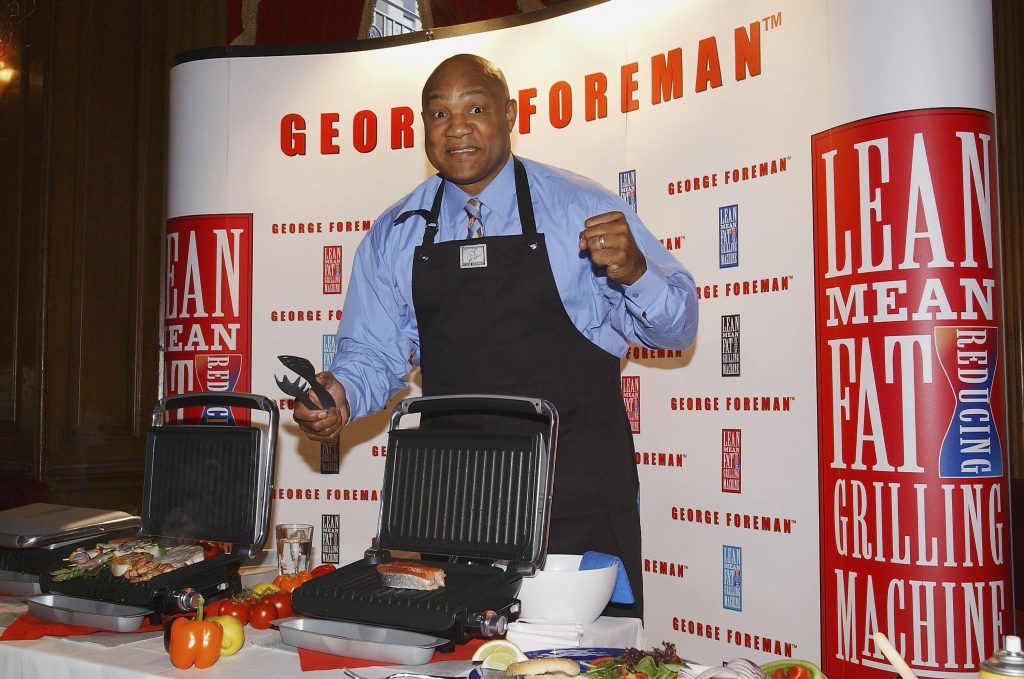
A change that eventually pays off. The “George Foreman Lean Mean Fat-Reducing Grilling Machine”, an electric grill for fat-reduced grilling, becomes a worldwide bestseller and makes George Foreman a multi-millionaire. With a 40 percent share in the sale of each meat sizzler, up to 4.5 million dollars flow into the ex-champ’s account every month. That is until the barbecue manufacturer Salton Inc. acquires the rights to the name and image of the successful testimonial for 137.5 million dollars in December 1999.
George Foreman returns to the heavyweight throne
Even after the two missed title opportunities, Foreman was still motivated to go for it again in the ropes. What he was not granted – to wrest the title from Evander Holyfield – was finally achieved in 1997 by someone else, namely Michael Moorer. His opponent in his first title defense was the now 45-year-old “boxing grandpa” George Foreman, who was not at the top of the world rankings.
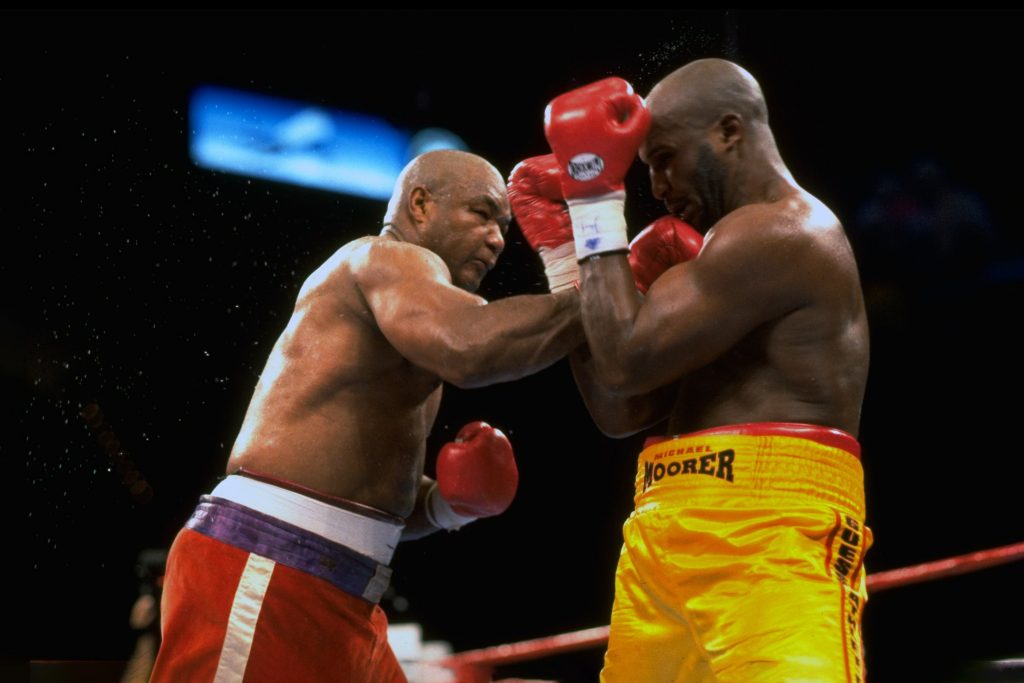
What looks like a lucrative deal with a manageable risk for Moorer due to the challenger’s prominence and age turns out to be a fiasco for the defending champion. In round ten, Foreman, who is hopelessly behind on the scorecards, shocks his opponent with a punch to the chin that sends Moorer to the floor. November 5, 1994 goes down in boxing history. Foreman sets three records with this historic victory: Not only is he the oldest heavyweight world champion of all time, he also breaks the record for the longest period between winning the world championship crown for the first and second time. And on top of that, the age difference in a heavyweight world championship fight has never been as great as on this evening in the Grand Garden Arena in Las Vegas.
Career ends at 48 – another comeback ruled out
Three years later, George Foreman ended his boxing career at the age of 48 after a duel with compatriot Shannon Briggs with a fight record of 76 wins – 68 of them by knockout – and five defeats. Since then, he has only been seen at boxing events outside the ring, as a guest of honor or as a TV pundit. He canceled a scheduled fight against Larry Holmes in 1999 at the age of 50, as well as a comeback announced for his 55th birthday, where he originally wanted to prove that the age of 55 is “by no means a death sentence”.
It is rumored that the reason for the cancellation was the veto of his wife Joan, with whom Foreman has seven children, five sons – George Jr., George III (“Monk”), George IV (“Big Wheel”), George V (“Red”) and George VI (“Little Joey”) – and two daughters, Natalia and Leola. The five boys are all named after their father. “So they always know where they come from,” laughs Foreman. The family of children, which also includes three other daughters from another relationship, is completed by the two adopted daughters Isabella Brandie Lilja and Courtney Isaac, as well as several grandchildren.
Now the whole family will come together once again at the family estate in Houston to say goodbye to one of the greatest boxers of all time.
Text: Andreas Ohlberger